



Climate pressures put soil in the spotlight
As growers grapple with rising temperatures, drought and increasingly erratic weather patterns, attention is turning to one of viticulture’s oldest assets: soil. Producers and researchers say vineyard resilience may depend as much on what lies beneath the vines as what grows above them.
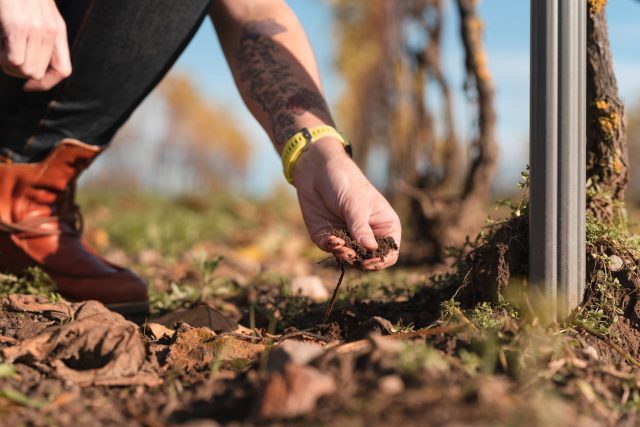
Wine producers have spent years experimenting with solutions to climate change, from regenerative farming and precision technology to alternative grape varieties and higher altitude vineyards.
Despite those efforts, growers continue to face mounting pressure from earlier harvests, rising alcohol levels and increasingly unpredictable weather. According to the latest figures from the International Organisation of Vine and Wine, global wine production fell by 9.6% in 2023 following severe weather events across many regions.
Italian geologist Carlo Ferretti, founder of Geo Identity Research, believes soil is becoming one of the most important tools available to growers.
“As climate change accelerates, its effects on agriculture are becoming increasingly pronounced,” he said.
“In this evolving landscape, soil is no longer just a passive growing medium. It is an active system that can either buffer or amplify climatic stress.”
Water retention becomes critical
Producers are paying increasing attention to soils that retain moisture during prolonged dry periods.
At Famiglia Casadei in Tuscany, owner and technical director Stefano Casadei said clay-rich soils have proved particularly valuable during drought conditions.
“Climate change is forcing all of us to rethink, very deeply, the role of soil in contemporary viticulture,” he said.
Clay content across some of the estate’s vineyards ranges from 35% to 43%, allowing soils to maintain water reserves even during severe droughts.
Similarly, at Evening Land in Oregon’s Willamette Valley, winemaker John Faulkner described clay as “the answer to climate change” because of its ability to retain moisture and stabilise vine growth during extreme weather swings.
Limestone and chalk offer cooling benefits
Elsewhere, producers are finding advantages in calcareous and chalk-based soils.
Ferretti said limestone-derived soils combine strong drainage with a cooling effect that can help vineyards cope with rising temperatures.
Partner Content


In Sicily, where producers increasingly contend with heatwaves and intense rainfall, the vice-president of Sicilia DOC Giuseppe Bursi said chalk and limestone soils have become a significant advantage.
“They prevent water from stagnating around the roots,” he said.
“They also have the ability to reflect solar radiation. In a region like Sicily, where the sun can be relentless, chalky white soils reflect the heat away.”
According to Bursi, this helps maintain freshness and slower ripening in the vineyard despite hotter growing seasons.
No universal solution
Experts caution that there is no single soil type capable of solving every climate challenge.
Different regions require different approaches depending on rainfall patterns, temperatures and vineyard conditions.
“In the end, no single soil emerges as universally ideal,” said Ferretti.
“In drought-prone areas, clay-rich or deep chalk soils may offer critical water reserves. In regions experiencing intense rainfall, well-draining calcareous or sandy soils may be more advantageous.”
Farming practices remain key
While soil type matters, researchers argue that management practices are equally important.
Many producers are increasing organic matter through compost, cover crops and reduced cultivation to improve water retention and support microbial activity.
At Garden Creek Vineyards in California’s Alexander Valley, co-owner Justin Warnelius-Miller said composting and organic matter have become central to vineyard management.
“We emphasise composting and organic matter incorporation to build a living microbial ecosystem that improves nutrient availability and increases the soil’s capacity to retain moisture naturally,” he said.
For growers facing an increasingly volatile climate, the consensus is clear. Soil may not eliminate the effects of climate change, but understanding and managing it effectively could play a critical role in protecting vineyards for decades to come.
Related news
OIV: tariffs and climate weigh on wine trade
Chablis adapts vineyard rules to future-proof against climate challenges


